The Friday Chat
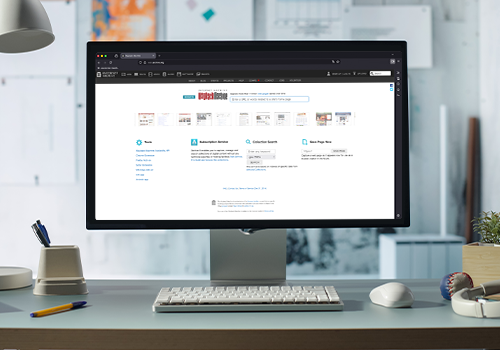
Do you remember the internet of the ’90s? The blinking GIF animations, guestbooks, hit counters and websites that looked like digital yard sale flyers? What was cutting-edge back then feels like a relic from another era today.
But the old web hasn’t vanished – it’s been archived. Projects like the Wayback Machine from the Internet Archive, the Digital Public Library of America and countless other digitization initiatives preserve what would otherwise be lost forever. They make digital time travel possible – and it’s equal parts fascinating, educational and entertaining.

VPNs are touted as a digital silver bullet: browse anonymously, work securely at a café, stream Netflix from abroad. Provider advertising makes it sound like you’re defenseless online without a VPN.
But is that really true?
SoftMaker Office

If uniform documents are to be distributed to a wider audience, it quickly becomes tedious if you have to repeatedly enter names, customer numbers and addresses manually. Maintaining a bibliography by connecting a database is also far more convenient.
TextMaker NX and TextMaker 2024 provide an easy option for populating letters, envelopes, and address labels with dynamic data from a database. All you have to do as a user is select a record and determine where the data should be inserted.
Google Drive, OneDrive, Dropbox & Co.: many people use cloud services to manage their files regardless of location.
SoftMaker Office for Windows and FlexiPDF for Windows, too, offer the option to conveniently store documents in the cloud.
But how does it work? In this article, we'll show you how to save your documents in the cloud with SoftMaker Office and FlexiPDF.

It’s never a bad idea to keep multiple copies of important files. However, this can lead to having far more copies than you really need, clogging up your storage space or simply being in the way.
Getting rid of excessive duplicates isn’t quite as easy as it may seem. Before deleting files, you want to make sure they really are redundant and not just sharing the same name. To delete duplicates securely, you need two things: a good duplicate finder and a strategy to get the best use out of it.